| Category | Specific Parameter | Standard Limit | Reference Standard (Full Name, Issuing Authority, Year) |
| I. Water Quality Parameters | 1. Basic Water Quality Indicators |
| Dissolved Oxygen (DO) | Freshwater: ≥5 mg/L; Seawater: ≥4 mg/L; High-density culture: ≥6-8 mg/L | Water Quality Standard for Fisheries (GB 11607-89, State Environmental Protection Administration, State Bureau of Technical Supervision, 1989); Pollution-free Food - Water Quality for Mariculture (NY 5052-2001, Ministry of Agriculture, 2001); Technical Specifications for Industrialized Culture of Barramundi (DB46/T 511-2020, Hainan Provincial Administration for Market Regulation, 2020) |
| pH Value | Freshwater: 6.5-8.5; Seawater: 7.5-8.5; Special species (e.g., barramundi): 7.5-8.5 | Water Quality Standard for Fisheries (GB 11607-89, State Environmental Protection Administration, State Bureau of Technical Supervision, 1989); Pollution-free Food - Water Quality for Mariculture (NY 5052-2001, Ministry of Agriculture, 2001); Technical Specifications for Industrialized Culture of Barramundi (DB46/T 511-2020, Hainan Provincial Administration for Market Regulation, 2020) |
| Unionized Ammonia (NH₃-N) | Freshwater: ≤0.02 mg/L; Seawater: ≤0.05 mg/L (Total ammonia shall be converted based on water temperature and pH) | Water Quality Standard for Fisheries (GB 11607-89, State Environmental Protection Administration, State Bureau of Technical Supervision, 1989, Appendix A); Pollution-free Food - Water Quality for Mariculture (NY 5052-2001, Ministry of Agriculture, 2001) |
| Nitrite (NO₂⁻-N) | Freshwater: ≤0.1 mg/L; Seawater: ≤0.2 mg/L | Pollution-free Food - Water Quality for Freshwater Aquaculture (NY 5051-2001, Ministry of Agriculture, 2001); Pollution-free Food - Water Quality for Mariculture (NY 5052-2001, Ministry of Agriculture, 2001) |
| Permanganate Index (CODMn) | Pond tail water: Grade I ≤15 mg/L, Grade II ≤25 mg/L (Classified by receiving water area) | Discharge Standard of Pond Aquaculture Tail Water (DB 36/1993-2004, Jiangxi Provincial Bureau of Quality and Technical Supervision, 2004); Local Standards of Chongqing (Specific name shall be based on local regulations) |
| 2. Heavy Metals and Toxic Substances |
| Copper (Cu) | ≤0.01 mg/L | Water Quality Standard for Fisheries (GB 11607-89, State Environmental Protection Administration, State Bureau of Technical Supervision, 1989) |
| Mercury (Hg) | ≤0.0005 mg/L | Water Quality Standard for Fisheries (GB 11607-89, State Environmental Protection Administration, State Bureau of Technical Supervision, 1989) |
| Lead (Pb) | ≤0.05 mg/L | Water Quality Standard for Fisheries (GB 11607-89, State Environmental Protection Administration, State Bureau of Technical Supervision, 1989) |
| Hexachlorocyclohexane (HCH), Dichlorodiphenyltrichloroethane (DDT) | ≤0.002 mg/L | Pollution-free Food - Water Quality for Freshwater Aquaculture (NY 5051-2001, Ministry of Agriculture, 2001) |
| 3. Nutrient Salts | | |
| Total Nitrogen (TN) | Tail water: Grade I ≤3 mg/L, Grade II ≤5 mg/L (Applicable to both freshwater and seawater) | Discharge Standard of Pond Aquaculture Tail Water (DB 36/1993-2004, Jiangxi Provincial Bureau of Quality and Technical Supervision, 2004); Local Standards of Chongqing (Specific name shall be based on local regulations) |
| Total Phosphorus (TP) | Tail water: Grade I ≤0.4 mg/L, Grade II ≤0.8 mg/L (Applicable to both freshwater and seawater) | Discharge Standard of Pond Aquaculture Tail Water (DB 36/1993-2004, Jiangxi Provincial Bureau of Quality and Technical Supervision, 2004); Local Standards of Chongqing (Specific name shall be based on local regulations) |
| II. Environment and Facilities | 1. Tail Water Discharge |
| Suspended Solids (SS) | Pond tail water: Grade I ≤45 mg/L, Grade II ≤90 mg/L | Discharge Standard of Pond Aquaculture Tail Water (DB 36/1993-2004, Jiangxi Provincial Bureau of Quality and Technical Supervision, 2004); Local Standards of Chongqing (Specific name shall be based on local regulations) |
| Discharge Classification Requirements | Grade I shall be implemented for key water areas; Grade II for general water areas | Local Standards (e.g., Jiangxi, Chongqing; specific name shall be based on local regulations) |
| 2. Aquaculture Facilities |
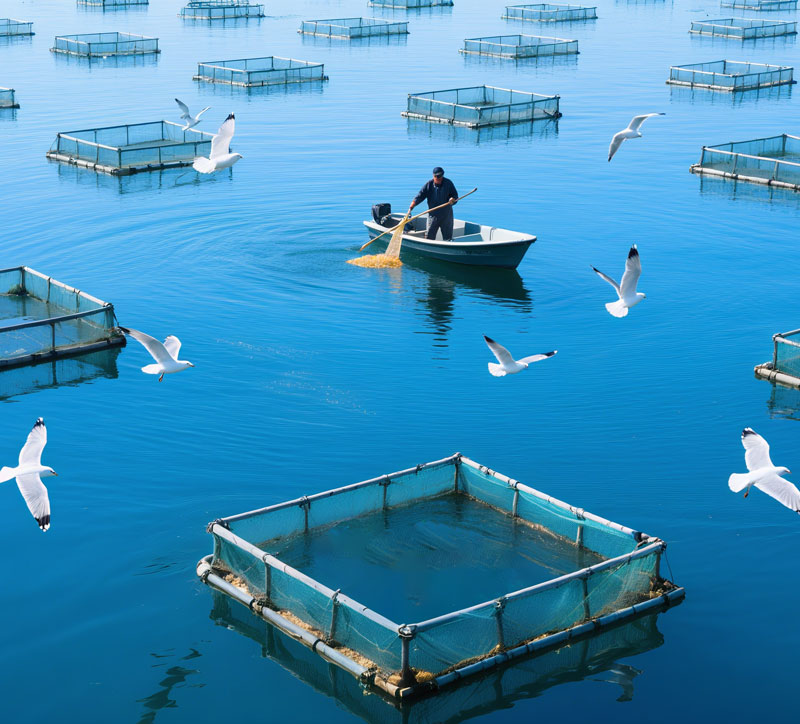
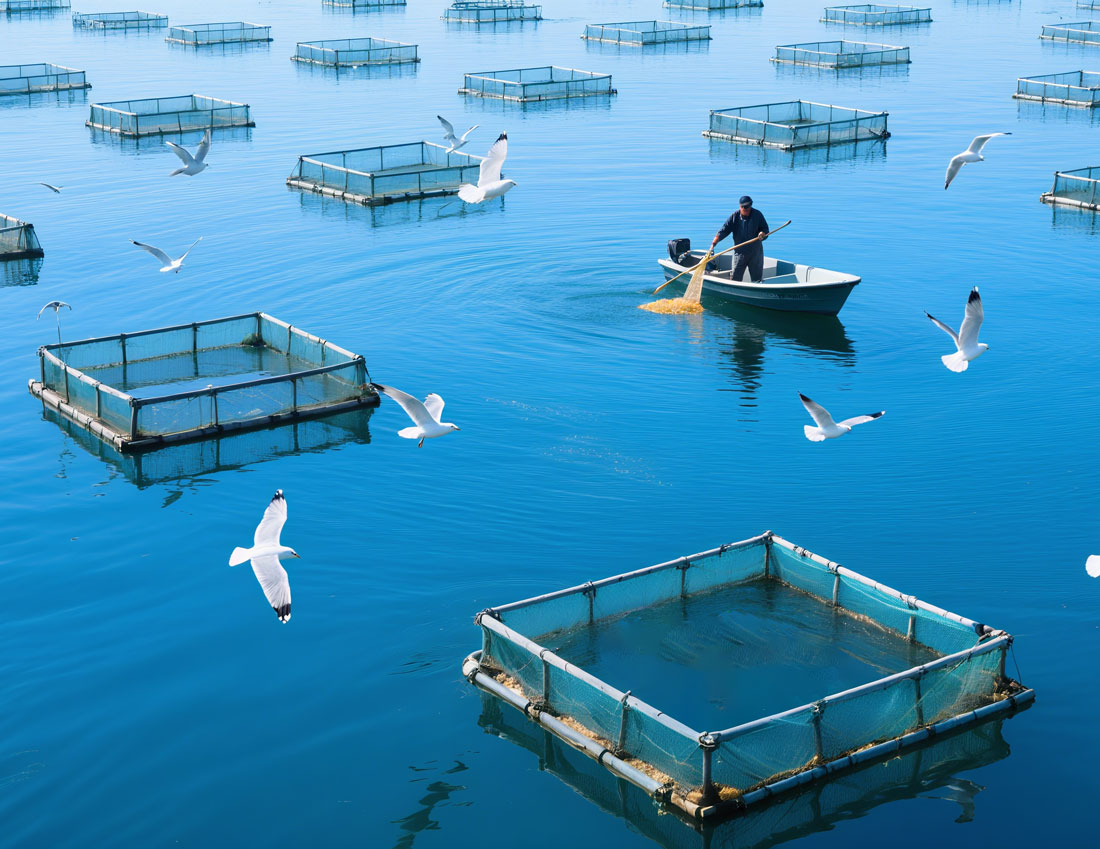
| Water Depth for Cage Culture | ≥5 m | Technical Guidelines for Cage Aquaculture (FAO, Food and Agriculture Organization of the United Nations, 2018) |
| Water Flow Rate for Cage Culture | 0.05-0.2 m/s | Technical Guidelines for Cage Aquaculture (FAO, Food and Agriculture Organization of the United Nations, 2018) |
| Cage Spacing | ≥10 m | Industry Routine Requirements (Refer to FAO and local practices) |
| Industrialized Culture (Barramundi) | Water temperature 20-34℃, salinity 16-23, DO ≥5 mg/L | Technical Specifications for Industrialized Culture of Barramundi (DB46/T 511-2020, Hainan Provincial Administration for Market Regulation, 2020) |
| III. Biology and Management | 1. Fry and Stocking Density |
| Fry Rearing Density of Four Major Chinese Carps | 1.5-2.25 million tails/ha | Technical Specifications for Pond Culture of Four Major Chinese Carps (DB44/T 483-2008, Guangdong Provincial Bureau of Quality and Technical Supervision, 2008) |
| Polyculture Density of Marketable Four Major Chinese Carps | Silver carp & bighead carp ≤1000 tails/mu | Technical Specifications for Pond Culture of Four Major Chinese Carps (DB44/T 483-2008, Guangdong Provincial Bureau of Quality and Technical Supervision, 2008) |
| Industrialized Culture Density of Barramundi | Body length 2-3 cm: 1500-2500 tails/m³; Body length ≥10 cm: 50-200 tails/m³ | Technical Specifications for Industrialized Culture of Barramundi (DB46/T 511-2020, Hainan Provincial Administration for Market Regulation, 2020) |
| 2. Feed and Drugs |
| Compound Feed Safety | Comply with GB 13078-2017, NY 5072-2002 | Feed Hygiene Standard (GB 13078-2017, General Administration of Quality Supervision, Inspection and Quarantine, Standardization Administration of China, 2017); Pollution-free Food - Safety Limits for Compound Feed Used in Fisheries (NY 5072-2002, Ministry of Agriculture, 2002) |
| Drug Withdrawal Period | Oxytetracycline ≥21 days, Sulfonamides ≥30 days | Pollution-free Food - Guidelines for the Use of Drugs in Fisheries (NY 5071-2002, Ministry of Agriculture, 2002) |
| Prohibited Drugs | Malachite green, chloramphenicol, etc. (more than 30 types in total) | Regulations on the Quality and Safety Management of Aquaculture (Decree No. 31 of the Ministry of Agriculture, 2003); List of Veterinary Drugs and Their Compounds Prohibited in Food-Producing Animals (Announcement No. 250 of the Ministry of Agriculture and Rural Affairs, 2020) |
| 3. Disinfection Measures |
| Fry Disinfection | Soak in 3%-5% salt solution for 5-10 minutes | Technical Specifications for Pond Culture of Four Major Chinese Carps (DB44/T 483-2008, Guangdong Provincial Bureau of Quality and Technical Supervision, 2008) |
| Water Disinfection (Quicklime) | 225-300 kg/ha, full pond sprinkling | Technical Specifications for Pond Culture of Four Major Chinese Carps (DB44/T 483-2008, Guangdong Provincial Bureau of Quality and Technical Supervision, 2008) |
| IV. Local Special Requirements | Implementation Time of Tail Water Discharge in Guangdong | Ponds of 30 mu and above: Newly-built/renovated ones since May 2024; Existing ones since May 2026 | Discharge Standard of Aquaculture Tail Water (DB44/T 2462-2024, Guangdong Provincial Administration for Market Regulation, Department of Ecology and Environment, 2024) |
| Production Record Retention | Aquaculture logs and drug use records shall be retained for at least 2 years | Code of Practice for Quality and Safety Management of Aquaculture (DB44/T 659-2009, Guangdong Provincial Bureau of Quality and Technical Supervision, 2009) |