

-
pH & Alkalinity (ALK) Complete Guide: From Basics to Practical Use
In numerous fields such as water quality monitoring, industrial production, and environmental governance, pH (acidity-alkalinity) and ALK (alkalinity) are two frequently used core indicators. While interrelated, they are essentially distinc···
10-28
2025
> -
Drinking Water 101: What Secrets Does Water Color Hold? Master the Color Index Now!
When you turn on the faucet, have you ever noticed the color of the water? Is only clear and transparent water considered normal? In fact, the "colority" of drinking water for daily use is an important sensory indicator. It not only affec···10-17
2025
> -
VVNA: Specializing in Swimming Pool Water Quality Testing | Standards, Key Params & Scientific Solutions
Since its establishment, VVNA has taken "Safeguarding Water Quality Safety" as its core mission, deeply engaging in the field of water quality research and detection. Through continuous technological investment and practical accumulation,···09-15
2025
> -
Key Factors Affecting Residual Chlorine Test Results
As a key artificially added indicator in tap water quality standards, residual chlorine plays an important role in preventing secondary bacterial contamination of water bodies — insufficient content fails to achieve bacteriostatic effect, ···08-26
2025
> -
Chlorine Disinfectant Applications, Residual Chlorine Control & Detection Technology Evolution
With their high-efficiency bactericidal ability, chlorine disinfectants have become a "conventional weapon" in scenarios such as tap water purification, swimming pool water quality maintenance, and tableware disinfection. They play an irrep···08-26
2025
> -
What is Turbidity? Why Test It?
Turbidity refers to the cloudiness of water, which is a measure of the reduction in water transparency caused by insoluble substances. These insoluble substances include solid particles suspended in water (such as sediment, humus, and plank···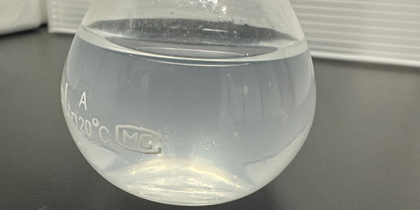
07-04
2025
>

Follow Us