
What is Turbidity? Why Test It?
-
 2025-07-04
 -
 Click Count:1006
  Editor:VVNA
 Source:Shenzhen TongAo Technology Co., Ltd
What is Turbidity?
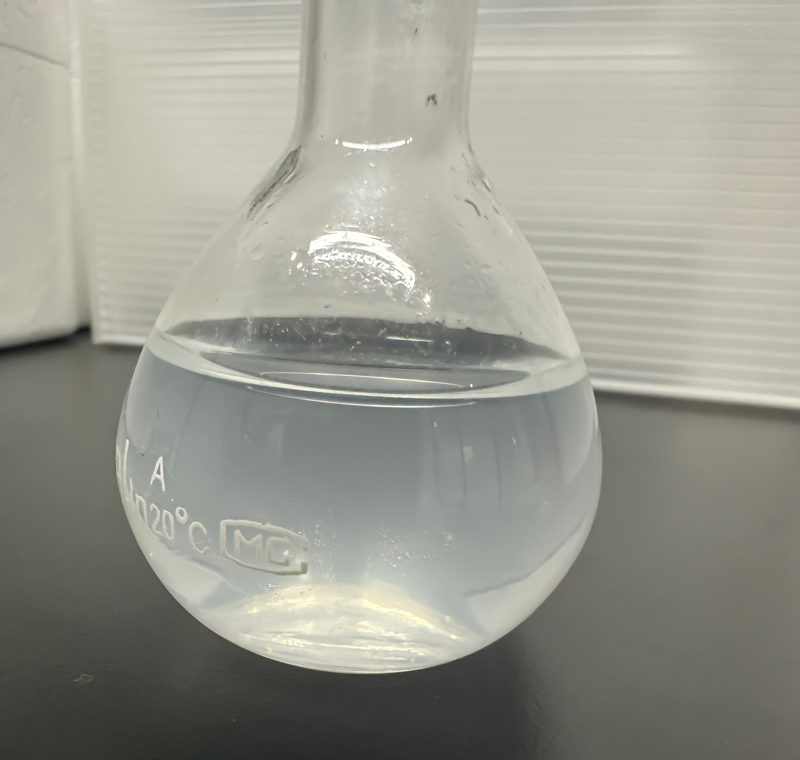
Turbidity refers to the cloudiness of water, which is a measure of the reduction in water transparency caused by insoluble substances. These insoluble substances include solid particles suspended in water (such as sediment, humus, and planktonic algae) and colloidal particles. Depending on the measurement principles, turbidity can be expressed in various units, with NTU, FTU, and FAU being the most common ones. In China's water quality standards and specifications, NTU has been adopted as the standard unit for turbidity, used to quantify the intensity of the scattered light effect produced by insoluble substances when light passes through water.
The Relationship Between Turbidity and Water Quality
Turbidity is a crucial water quality indicator for both water supply and industrial water treatment processes. Reducing turbidity simultaneously decreases the levels of bacteria, coliforms, viruses, Cryptosporidium, iron, manganese, and other contaminants in water. Studies have shown that when the turbidity of water is 2.5 NTU, only 27.3% of organic matter is removed; when turbidity is reduced to 0.5 NTU, the organic matter removal rate reaches 79.6%; and when turbidity is controlled at 0.1 NTU, the vast majority of organic matter is eliminated, and the content of pathogenic microorganisms is also significantly reduced. This indicator is particularly critical for the tap water industry. The tap water standard issued in 2007 requires the turbidity of finished drinking water to be below 0.5 NTU. Many water treatment plants implement a more stringent internal control standard of approximately 0.2 NTU for their finished water. For circulating cooling water systems, the makeup water is required to have a turbidity of 2–5 NTU, while the influent water for demineralized water treatment should have a turbidity of less than 3 NTU. Therefore, the measurement of water turbidity is extremely necessary.
Turbidity monitoring is required in the following scenarios: pre-filtration, post-filtration, sedimentation, and finished water testing in water treatment plants; water quality monitoring of municipal pipe networks; industrial process water quality monitoring, including circulating cooling water, effluent from activated carbon filters, and effluent from membrane filtration systems; as well as in aeration tanks, secondary sedimentation tanks, thickening tanks, and digesters of sewage treatment plants.
Basic Concepts of Turbidity:
Turbidity is an optical effect unit. The turbidity detector is installed at a 90° angle to the incident light and measures the light scattered by particles in water at this angle. There is no direct dimensional conversion between NTU and traditional weight concentration units such as mg/L.
Even the purest water has a certain level of turbidity. The turbidity of ideal pure water is approximately 0.01–0.012 NTU.
Another important concept of turbidity is that it exhibits a linear relationship within the range of 0–40 NTU. Therefore, only a single-point calibration is required for accurate measurements in this range.
The basic measurement principle is as follows: a light source emits a beam of incident light onto the suspended particles in water. These particles scatter the light in all directions, and the detector measures the scattered light at a 90° angle to the incident light. Compared with the transmitted light measurement method, this scattered light measurement method offers significantly higher resolution and repeatability.
Different types of turbidimeters are used for tap water and sewage applications. Turbidimeters for tap water typically use incandescent or infrared light sources, while those for sewage applications mainly use infrared light sources. Laser turbidimeters are primarily used for monitoring the status of filtration membranes in membrane treatment processes, turbidity monitoring in direct drinking water systems, and ultra-low range turbidity monitoring of finished water in water treatment plants.
Scan the QR code with WeChat to share with friends
-

- Follow VVNA on WeChat
Stay updated on VVNA's updates
-
 Emergency Water Quality Testing Solutions
 -
Aquaculture Water Quality Testing Solutions
-
Pool Water Quality Testing Solutions
-
Municipal Sewage Water Quality Testing Solutions
-
Industrial Water Quality Testing Solutions
-
Application of the VN3100 Portable Turbidimeter in Winemaking Facilities Swimming Pool and SPA Water
-
Application of the VN3100 Portable Turbidimeter in Municipal Wastewater Treatment
-
Application of the VN3100 Portable Turbidimeter in the Hydrology and Water Resources Sector
Follow Us