
Drinking Water 101: What Secrets Does Water Color Hold? Master the Color Index Now!
-
 2025-10-17
 -
 Click Count:1203
  Editor:VVNA
 Source:Shenzhen TongAo Technology Co., Ltd
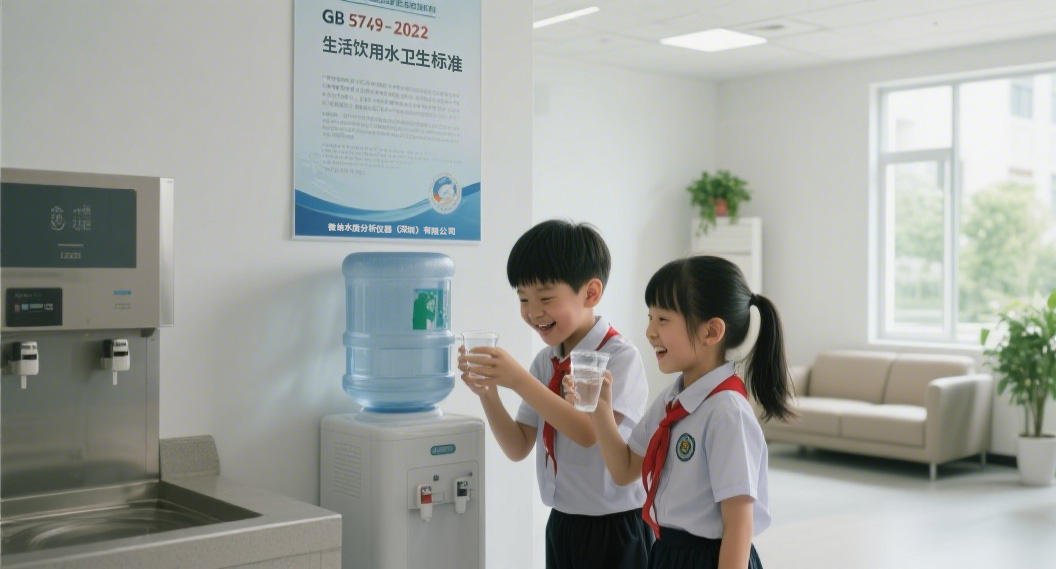
When you turn on the faucet, have you ever noticed the color of the water? Is only clear and transparent water considered normal? In fact, the "colority" of drinking water for daily use is an important sensory indicator. It not only affects the water use experience but may also indicate changes in water quality. Today, combined with the GB 5749-2022 standard, we will help you fully understand water colority!
I. Why Should We Pay Attention to Water Colority?
We cannot personally judge whether drinking water is absolutely safe, but the color and odor of water directly affect our trust in its quality. If the water turns yellow or blue, even if it does not affect health, it will still make people feel uneasy. More importantly, poor colority may indirectly reflect water pollution. Additionally, colored water can affect industrial production (e.g., the quality of papermaking and textile products) and the growth of aquatic organisms. Therefore, drinking water must be not only safe but also "visually pleasing".
II. What Are the Basis for Colority Detection?
To accurately judge water colority, professional standards must be followed. The main basis are the following two:
GB/T 5750.2-2023 Standard Examination Methods for Drinking Water - Part 2: Sampling and Preservation of Water Samples
GB/T 5750.4-2023 Standard Examination Methods for Drinking Water - Part 4: Sensory Characteristics and Physical Indicators
III. How to Collect Water Samples? Pay Attention to These Details!
Collecting water samples is the first step of detection. Incorrect procedures will affect the results. The key points are as follows:
Sampling Containers: Use clean ground-glass hard glass bottles (G) or clean polyethylene bottles (barrels/bags, P).
Container Cleaning: First, wash off dust and oil with water and detergent. After rinsing thoroughly with tap water, soak in 10% nitric acid (or hydrochloric acid) for more than 8 hours. Then rinse 3 times with tap water, and finally rinse thoroughly with pure water.
Sampling Requirements: Before sampling, rinse the sampler, container, and stopper 2-3 times with the water sample to be collected (except for water samples for petroleum hydrocarbon testing).
Preservation Methods: Different indicators have different preservation requirements. For colority-related tests: store at 0-4℃ for refrigeration and conduct detection within 24 hours (on-site detection is preferred). pH must be detected within 12 hours, and conductivity is also recommended to be tested on-site.
IV. Understand "Water Color" in One Article: Concept and Significance of Colority
What Is Colority?
What Is the Significance of Paying Attention to Colority?
Colority refers to the degree of color exhibited by water, which is divided into "apparent color" and "true color":
Apparent Color: The color of water without removing suspended solids, including the color of both dissolved and suspended substances;
True Color: The color of water after removing suspended solids, which only comes from dissolved colored substances.
For clean water with low turbidity, the apparent color is almost the same as the true color. For sewage or water with high turbidity, there is a significant difference between the two, and usually only the true color is measured.
Discoloration of raw water may be a signal of the presence of harmful components (however, the WHO has not set a health-based guideline value for colority, as it does not directly affect health);
Colored water will make people feel uncomfortable, leading to a loss of trust in the water supply and potentially causing complaints;
It affects the quality of industrial water use. For example, papermaking and textile products may be substandard due to the use of colored water;
It hinders the transmission of sunlight, which is not conducive to the growth of aquatic organisms;
Excessive colority of sewage will affect the appearance of the receiving water body, so there are strict requirements for colority in sewage discharge.
V. How to Measure Colority? What Is the Indicator Limit?
The commonly used method is the Platinum-Cobalt Standard Colorimetric Method: the color of 1 mg/L of platinum (in a specific form) is defined as 1 colority unit (1 degree). During measurement, it is important to note that turbidity will interfere with the results. Therefore, clear water samples with turbidity ≤ 1 NTU can be measured directly; for turbid water samples with turbidity > 1 NTU, filtration through a 0.45 μm filter membrane is required before measurement.
For scenarios requiring convenient and rapid colority detection (such as on-site emergency monitoring and daily water quality inspections), the VVNA VI3200 Portable Colorimeter can be used. This instrument complies with relevant detection standards, features simple and efficient operation, and can quickly obtain accurate colority data. It is suitable for colority detection in various scenarios, including drinking water, municipal sewage, and aquaculture. Its specific test steps are as follows:
Slowly add the treated water sample (take clear water samples directly; take turbid water samples after filtration through a 0.45 μm filter membrane) into a clean colorimetric cuvette, taking care to avoid generating bubbles;
Cover the colorimetric cuvette, wipe the outer wall to ensure there is no dirt or water stains, then place the cuvette steadily into the colorimetric slot of the instrument and close the instrument cover;
Press the "Read" button on the instrument, and wait a few seconds to easily obtain the colority value of the water sample.
According to the GB 5749-2022 standard, the colority limit for drinking water for daily use is 15 degrees (platinum-cobalt color units).
VI. The Water Has Changed Color? Don't Panic! Causes and Solutions Are Here
Yellow Water
White Water
Blue Water
Green Water
Pink Water
Black or Red Water
Causes: ① The water has reacted with the pipe wall and the metal cavity of the faucet due to long-term disuse of the water pipe, producing colored metal ions; ② Sediment has been introduced during pipe burst repair work; ③ After water supply restoration following a cut-off, impurities in the pipeline are washed out; ④ The secondary water supply facilities in the community have not been cleaned and disinfected in a timely manner, leading to bacterial growth; ⑤ There are few residents in new communities, resulting in low water usage and water accumulation in the pipeline.
Solution: Run the water for a while, and it will return to normal.
Causes: ① Air is dissolved in water under pressure, and bubbles escape when the faucet is turned on, making the water appear milky white (a physical phenomenon, harmless); ② Bleaching powder is added to the secondary water supply in the community for sterilization, and residual calcium hypochlorite makes the water appear off-white with a slight chlorine odor.
Solutions: ① Let it stand for a few seconds, and the bubbles will disappear, making the water clear; ② Boil the water or let it stand for a while, and the chlorine odor will dissipate.
Cause: For toilets with toilet bowl cleaner used, the check valve is damaged or the water outlet hose of the water tank is below the liquid level. When the faucet is turned on, an instantaneous negative pressure is generated in the pipeline, sucking the water containing toilet bowl cleaner into the pipe network.
Solutions: ① Install a check valve; ② Move the hose out of the water surface in the tank; ③ Use new-type toilets without check valves, and try to avoid using toilet bowl cleaner.
Causes: ① The disinfection of the finished water is not up to standard, leading to the massive reproduction of algae; ② The household water pipes have not been cleaned for a long time, resulting in algae growth.
Solutions: ① Contact the property management or the water supply company; ② Replace the water pipes or disinfect and clean them.
Cause: Coloring agent is added to the heating water. The abnormal phenomenon is caused by ① Users privately connecting the heating pipe to the tap water pipe, and the check valve malfunctions, leading to backflow due to the higher pressure of the heating water; ② Private installation of heat exchangers for "stealing heat", and equipment leakage or explosion causes backflow.
Solution: It is strictly prohibited to privately connect pipes or install heat exchangers.
Causes: ① When the water is turned on after a cut-off, the pressure fluctuation in the pipeline washes away rust, and high-iron compounds make the water turn red or black; ② Manganese ions in the water are oxidized and deposited on the pipe wall, and peel off when disturbed; ③ Insufficient chlorine content results in incomplete bacterial killing.
Solutions: Do not use the water directly; first run the water until it becomes clear. A water purifier can be installed, or the water supply company can be contacted for on-site inspection.
VII. How to Remove Colority? Learn About These Methods
If the water colority exceeds the standard, it can be treated through the following technologies:
Adsorption Decolorization: Use analytical sieves, activated alumina, activated carbon, or silica gel to adsorb colored substances;
Coagulation Decolorization: Use coagulants to precipitate color-forming substances;
Oxidation Methods: Chemical oxidation (e.g., using chlorine or O3), photocatalytic oxidation, or ultrasonic oxidation to destroy chromophoric groups;
Biological Decolorization: Use microbial enzymes to oxidize or reduce colored molecules;
Electrochemical Methods: Internal electrolysis, electrocoagulation, electroflotation, etc., to purify water through electrode reactions;
Membrane Separation Methods: Use nanofiltration or reverse osmosis processes to separate pollutants in water and remove colority.
Scan the QR code with WeChat to share with friends
-

- Follow VVNA on WeChat
Stay updated on VVNA's updates
-
 Emergency Water Quality Testing Solutions
 -
Aquaculture Water Quality Testing Solutions
-
Pool Water Quality Testing Solutions
-
Municipal Sewage Water Quality Testing Solutions
-
Industrial Water Quality Testing Solutions
-
Application of the VN3100 Portable Turbidimeter in Winemaking Facilities Swimming Pool and SPA Water
-
Application of the VN3100 Portable Turbidimeter in Municipal Wastewater Treatment
-
Application of the VN3100 Portable Turbidimeter in the Hydrology and Water Resources Sector
Follow Us