
Water Safety 101 | All You Need to Know About Residual Chlorine
-
 2021-06-29
 -
 Click Count:964
  Editor:VVNA
 Source:Shenzhen TongAo Technology Co., Ltd
Chlorine (Cl₂) is a yellowish-green gas with a pungent odor, and it is also suffocating and highly corrosive. At 1 atmospheric pressure, chlorine liquefies into a yellowish-green transparent liquid when the temperature drops to -34.5℃, which can be stored in steel cylinders for later use. At room temperature, chlorine cylinders are under pressure, and the storage temperature shall not exceed 50℃. During use, liquid chlorine is gasified and then dissolved in water.
In nature, chlorine mostly exists in the form of Cl⁻ ions in minerals or seawater, with only a small amount present in the atmosphere in its free state. However, chlorine gas in the atmosphere often decomposes into two chlorine atoms (free radicals) under the action of ultraviolet rays, and chlorine gas is also one of the main elemental substances that damage the ozone layer.
Chlorine gas has low solubility in water, with a maximum solubility of about 1% at 10℃. When chlorine gas dissolves in water, it immediately undergoes a hydrolysis reaction to form hypochlorous acid (HClO). As a weak acid, hypochlorous acid dissociates instantaneously into H⁺ and ClO⁻ ions, and the equilibrium state of these two reactions is affected by the hydrogen ion concentration in water.
Both chlorine and hypochlorous acid can react with bacteria to kill them, and they can also react with various substances in water. Chlorine is a strong oxidant. One of the functions of skin care and sunscreen products we use daily is antioxidation. Sodium hypochlorite is the main component of the well-known 84 disinfectant, and its label clearly states "avoid contact with skin", which also reflects the strong oxidizing properties of chlorine-related substances from a side perspective.
When ammonia is present in water, chlorine and hypochlorous acid readily combine with ammonia to form various chloramines, such as NH₂Cl (monochloramine), NHCl₂ (dichloramine), and NCl₃ (trichloramine). These chloramines hydrolyze back into hypochlorous acid, so they also have disinfection and sterilization capabilities, but their effectiveness is not as strong as that of HClO, and their bactericidal effect is relatively slow.
Due to the good stability of chloramines in water and their long-lasting bactericidal effect, some water plants add additional ammonia while performing chlorination disinfection to form a certain amount of chloramines. This disinfection method is known as chloramine disinfection.
To ensure that all pathogenic bacteria in water can fully react with chlorine, an appropriate amount of residual chlorine should remain in the water after chlorination disinfection and a certain contact time to guarantee sustained bactericidal capacity. The remaining portion of the added chlorine after reacting with and being consumed by bacteria and impurities is called residual chlorine.
Residual chlorine is mainly classified into the following categories:
Free Chlorine: Chlorine existing in the form of Cl₂.
Combined Chlorine: Chlorine existing in the form of chloramines such as NH₂Cl, NHCl₂, and NCl₃.
Total Chlorine: The sum of free chlorine and combined chlorine, i.e., Total Chlorine = Free Chlorine + Combined Chlorine.
Since combined chlorine and free chlorine differ greatly in disinfection capacity, it is crucial to measure these two types of residual chlorine separately. Specifically:
Residual Chlorine (Free Chlorine): Chlorine existing in the form of hypochlorous acid, hypochlorite ions, or dissolved elemental chlorine.
Combined Chlorine: Chlorine existing in the form of chloramines and organic chloramines.
Total Chlorine: Chlorine existing in the form of free residual chlorine, combined chlorine, or both.
Chlorination disinfection originated in 1850. Thanks to its advantages of low cost, excellent disinfection effect, and ease of use, it has been the primary disinfection method for water plants at home and abroad for more than 100 years. In the water treatment industry, chlorine is not only used as a drinking water disinfectant but also commonly employed as a strong oxidant for treating cyanide-containing wastewater, sulfur-containing wastewater, as well as decolorizing and deodorizing wastewater. This process is often referred to as chlorination treatment.
In 1910, at the 38th Annual Meeting of the American Public Health Association, George A. Johnson reviewed the status of drinking water chlorination and mentioned that the effectiveness of chlorination disinfection had already been recognized as early as 1888, but it was not widely adopted by water supply plants until 20 years later. After the popularization of chlorination disinfection, waterborne diseases were effectively controlled, saving countless lives. Since then, the water supply system based on filtration and disinfection has been rated by the United States National Academy of Engineering as one of the greatest engineering and technological achievements of the 20th century.
Hypochlorous acid produced by the combination of chlorine gas and water can serve as a chlorine disinfectant. Chlorination disinfection features low cost, excellent bactericidal and disinfection efficacy, and simple operation. Currently, the vast majority of water plants worldwide adopt this disinfection method.
Water is not as "harmless" as people think. In urban water treatment plants, although coagulation, sedimentation, and filtration can remove many bacteria and other microorganisms from water, disinfection is still necessary to kill pathogenic bacteria and other harmful microorganisms to human health. Natural water often contains a large number of bacteria and microorganisms that are harmful to the human body, and it must be disinfected before drinking.
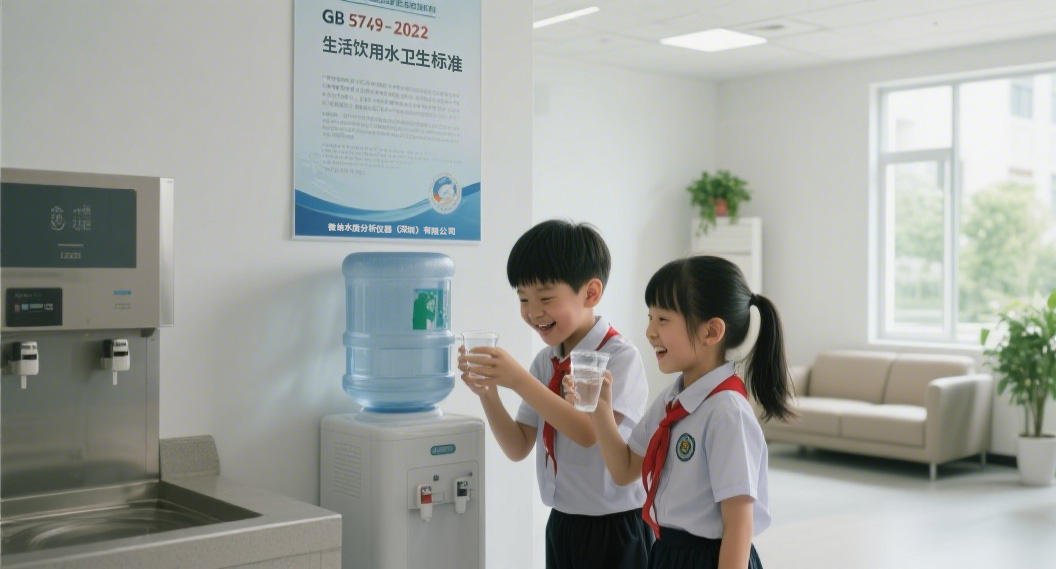
According to the Standards for Drinking Water Quality (GB 5749-2022), implemented on April 1, 2023, there are clear regulations on the routine indicators and requirements for disinfectants in drinking water. Moreover, the monitoring indicators vary depending on different disinfection methods:
When liquid chlorine, sodium hypochlorite, or calcium hypochlorite is used for disinfection, free chlorine shall be determined.
When chloramine disinfection is adopted, total chlorine shall be determined.
When ozone disinfection is used, ozone shall be determined.
When chlorine dioxide disinfection is employed, chlorine dioxide shall be determined; when a mixed disinfectant generator of chlorine dioxide and chlorine is used for disinfection, both chlorine dioxide and free chlorine shall be determined. Both indicators must meet the limit requirements, and at least one indicator shall satisfy the residual amount requirement.
China's drinking water standards stipulate that the free residual chlorine in finished water shall not be less than 0.3 mg/L after 30 minutes of contact time, and shall not be less than 0.05 mg/L at the end of the distribution network. Adding disinfectants is a commonly used method. Chlorination disinfection has the advantages of strong bactericidal ability, easy storage, low treatment cost, simple operation and use, good disinfection persistence, easy determination of residual chlorine, and convenient operation and management, along with mature application experience and processes. To maintain the disinfection effect of tap water and prevent microbial contamination during transportation through the distribution network to users, the residual chlorine content in tap water at the end of the distribution network must be above 0.05 mg/L, which is why tap water has a chlorine odor.
Accurate monitoring of indicators such as residual chlorine in water is crucial for ensuring drinking water safety. Our water quality detectors can accurately measure relevant indicators, providing reliable data support for monitoring the effectiveness of chlorination disinfection in the water treatment process and helping to safeguard public drinking water safety.
Scan the QR code with WeChat to share with friends
-

- Follow VVNA on WeChat
Stay updated on VVNA's updates
-
 Emergency Water Quality Testing Solutions
 -
Aquaculture Water Quality Testing Solutions
-
Pool Water Quality Testing Solutions
-
Municipal Sewage Water Quality Testing Solutions
-
Industrial Water Quality Testing Solutions
-
Application of the VN3100 Portable Turbidimeter in Winemaking Facilities Swimming Pool and SPA Water
-
Application of the VN3100 Portable Turbidimeter in Municipal Wastewater Treatment
-
Application of the VN3100 Portable Turbidimeter in the Hydrology and Water Resources Sector
Follow Us