
Knowledge Popularization | Top 10 Q&A on Drinking Water Safety and Health
-
 2025-11-03
 -
 Click Count:1140
  Editor:VVNA
 Source:Shenzhen TongAo Technology Co., Ltd
Why Is Water Called the Source of Life?
What Are the Important Roles of Water in the Human Body?
What Is Drinking Water for Daily Use? What Are Its Sanitary Requirements?
Why Must Drinking Water Be Disinfected?
What Are the Methods of Drinking Water Disinfection?
Why Does Tap Water Turn Milky White?
Why Does Tap Water Turn Yellow?
Why Does Limescale Form in Kettles? How to Deal with It?
What to Do If Abnormalities Occur in Tap Water (Such as Peculiar Smell, Turbidity, Etc.)?
What Should Be Noted When Using Bottled Water and Water Dispensers?
Water is an essential substance for all life on Earth to survive, and it is indispensable for human daily life and production activities. From a physiological perspective, the water content of an adult's body ranges from 50% to 70%, while that of children is as high as 80%. Water permeates all physiological processes. In terms of survival essentials, the human body's demand for water far exceeds that for food—total water deprivation can be life - threatening within just a few days. When the body loses 6% of its water, uncomfortable symptoms such as thirst, decreased urine output, and fever will occur. A water loss of 10% to 20% can even lead to fainting or death. It can be said that there is no life without water, which is the core reason why water is known as the "source of life".
Water is an indispensable substance for maintaining human life and metabolism. The daily physiological water requirement for adults is approximately 2.5 to 3 liters. Its important roles are mainly reflected in five aspects. Firstly, it serves as a core component of human cells, supporting the basic structure of the human body. Secondly, it participates in the digestion and absorption of food, helping convert nutrients into life - sustaining energy. Thirdly, it is involved in the metabolism of substances in the body and the excretion of metabolic wastes, eliminating waste through urine, sweat, and other forms to maintain the balance of the internal environment. Fourthly, it takes part in body temperature regulation, maintaining a stable body temperature through evaporative heat loss and other ways. Fifthly, it keeps organs such as joints and muscle sheaths lubricated and flexible, reducing injuries caused by friction during movement.
Drinking water for daily use refers to water used for human daily drinking and living activities. China's current Standards for Drinking Water Quality (GB5749-2022) sets strict sanitary requirements for it, covering 97 water quality indicators. The standard level is equivalent to that of the World Health Organization, the United States, the European Union, and other developed countries and regions. The specific sanitary requirements can be summarized into three core points. Firstly, it should have good sensory properties—transparent, colorless, free from peculiar smell and odor, and without visible suspended solids to the naked eye. Secondly, it should be epidemiologically safe, free from pathogenic microorganisms and parasite eggs to prevent the spread of water - borne infectious diseases. Thirdly, its chemical composition should be harmless. Chemical substances in the water must not cause acute poisoning, chronic poisoning, or long - term health hazards to the human body.
Studies have shown that there are as many as hundreds of types of pathogenic microorganisms that can contaminate drinking water. If these microorganisms enter the human body without treatment, they may lead to the occurrence and spread of water - borne infectious diseases such as typhoid fever, cholera, and hepatitis A, posing a serious threat to public health. To eliminate such risks from the source and ensure human health, drinking water for daily use must undergo strict disinfection before being consumed. Disinfection is a crucial line of defense for drinking water safety.
Currently, there are four mainstream drinking water disinfection methods in China, each with its own technical advantages. The first is chlorination disinfection, a widely used traditional method. It kills bacteria using disinfectants such as liquid chlorine, sodium hypochlorite, and chloramine, featuring low cost and stable effectiveness. The second is chlorine dioxide disinfection, which has high sterilization efficiency and is not prone to producing harmful by - products, making it suitable for scenarios with high water quality requirements. The third is ultraviolet disinfection. It destroys the DNA of microorganisms by leveraging the strong penetration of ultraviolet rays, eliminating the need for adding chemical agents and avoiding chemical residues. The fourth is ozone disinfection. It quickly kills microorganisms with its strong oxidizing property and can also improve the sensory properties of water. However, its disinfection effect does not last long, so it is often used in combination with other methods.
This phenomenon is not a sign of water quality pollution but a normal occurrence caused by changes in pressure during pipeline transportation. When tap water is transported in high - pressure sealed pipelines, air in the pipelines is forced to dissolve in the water due to the high pressure. When the water flows out of the faucet, the pressure drops sharply back to normal atmospheric pressure, and the dissolved air is released in the form of countless tiny bubbles, making the water appear milky white. Usually, after being left standing for a short while, the bubbles will disappear naturally and the water will become clear again. This does not affect the hygiene of the drinking water at all. If the water does not clear up after standing, you should contact the water supply department for handling.
Tap water turning yellow is mostly related to the water supply pipe network, especially the old iron pipes that have been in use for a long time. Rust is prone to forming on the inner walls of these pipes. When the pipes vibrate, the water flow rate changes, or after pipeline maintenance, the rust on the inner walls may peel off and mix into the water, causing the water to turn yellow. The solution is simple and effective: keep the faucet running for a period of time until all the rust in the pipelines is completely flushed out and the water becomes clear again before using it.
The formation of limescale is related to water hardness. Most of the water used in daily life has a certain degree of hardness. Calcium and magnesium ions in hard water exist in the form of soluble salts. When the water is heated, these salts are converted into insoluble substances such as calcium carbonate and magnesium carbonate. After precipitation, they adhere to the inner wall of the kettle to form limescale. It should be noted that the presence of limescale does not mean the water quality is substandard. To reduce or remove limescale, you can soften the water with a water purifier before boiling it. Alternatively, you can soak the kettle in vinegar and then clean it, using the acidic substance to dissolve the limescale.
In case of abnormalities in tap water, such as peculiar smell, significant color darkening, or turbidity, you should handle it scientifically in the following steps. Firstly, stop using it immediately. Stop using this water source and inform the neighborhood committee, property management, and nearby residents to stop using it at the same time to avoid health risks. Secondly, report it promptly. Call the water supply company's service hotline or the 12320 health supervision hotline, explain the situation in detail, and follow professional guidance. Thirdly, keep a sample. Use a clean container to store 3 to 5 liters of the abnormal water sample for analysis by health testing departments. Meanwhile, conduct health monitoring. If you accidentally drink the suspected polluted water, keep a close eye on your physical condition. If you experience discomfort such as abdominal pain or diarrhea, seek medical attention immediately and inform the doctor of the relevant situation. Finally, do not resume using the drinking water until the government administrative department issues an official notice stating that the water pollution problem has been resolved.
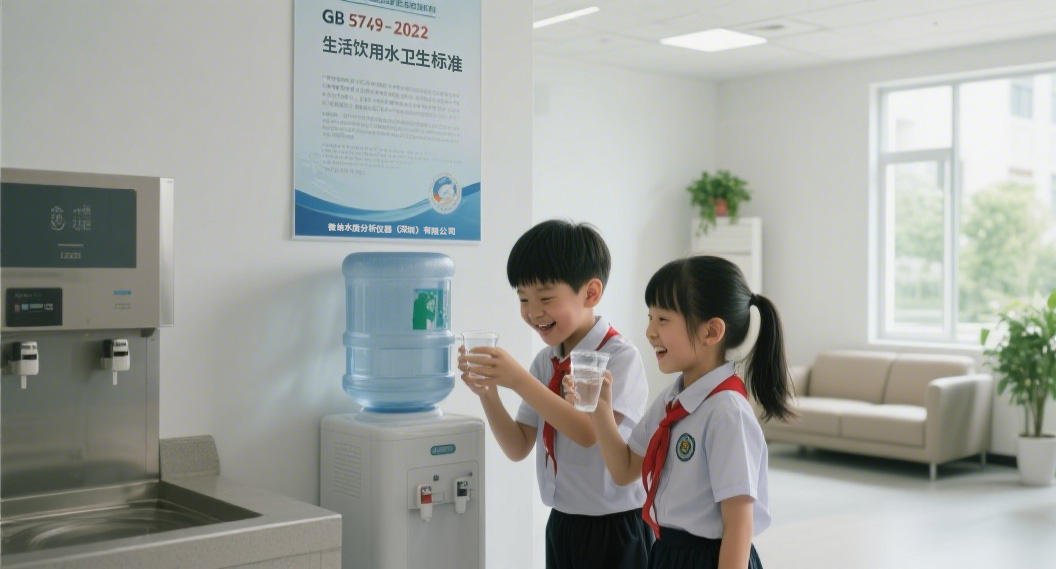
When using bottled water, you should choose products from regular brands. Check that the bottle body is smooth, bright, and highly transparent, and that the water inside is clear without turbidity, sediment, or flocculent floating substances. Once opened, bottled water is susceptible to microbial contamination, so it is recommended to finish drinking it within 3 to 7 days. As for water dispensers, their inner containers are prone to breeding bacteria and accumulating dirt, which is harmful to health. Therefore, it is essential to clean and disinfect water dispensers regularly to ensure the safety of the drinking water terminal.
Scan the QR code with WeChat to share with friends
This article is reprinted from cooperative media, other websites on the Internet, or partially edited and created by VVNA. VVNA publishes this article for the purpose of disseminating more information, which does not mean endorsing its views or verifying its descriptions. If you have any questions about the content, please contact VVNA customer service.
All content reprinted on this website comes from reliable sources and is clearly marked with its origin. (If the information of the original author is unavailable when reprinting, the author's name may not be indicated.) The copyright of the content shall belong to the original author. Due to objective constraints, if we fail to get in touch with the author, or the author disagrees with the publication of the content on this website, or any errors are found, please contact us. We will respect the author's wishes and make corrections or deletions in a timely manner.
Please be sure to respect the copyright and authorship of the works when reprinting or downloading them.
The content of the article is for reference only. Please indicate the source if reprinted.
-

- Follow VVNA on WeChat
Stay updated on VVNA's updates
-
 Emergency Water Quality Testing Solutions
 -
Aquaculture Water Quality Testing Solutions
-
Pool Water Quality Testing Solutions
-
Municipal Sewage Water Quality Testing Solutions
-
Industrial Water Quality Testing Solutions
-
Application of the VN3100 Portable Turbidimeter in Winemaking Facilities Swimming Pool and SPA Water
-
Application of the VN3100 Portable Turbidimeter in Municipal Wastewater Treatment
-
Application of the VN3100 Portable Turbidimeter in the Hydrology and Water Resources Sector
Follow Us